
Apiary
I've long loved these lines from Spanish poet Antonio Machado:
Last night as I was sleeping,
I dreamt—marvelous error!—
that I had a beehive
here inside my heart.
And the golden bees
were making white combs
and sweet honey
from my old failures.
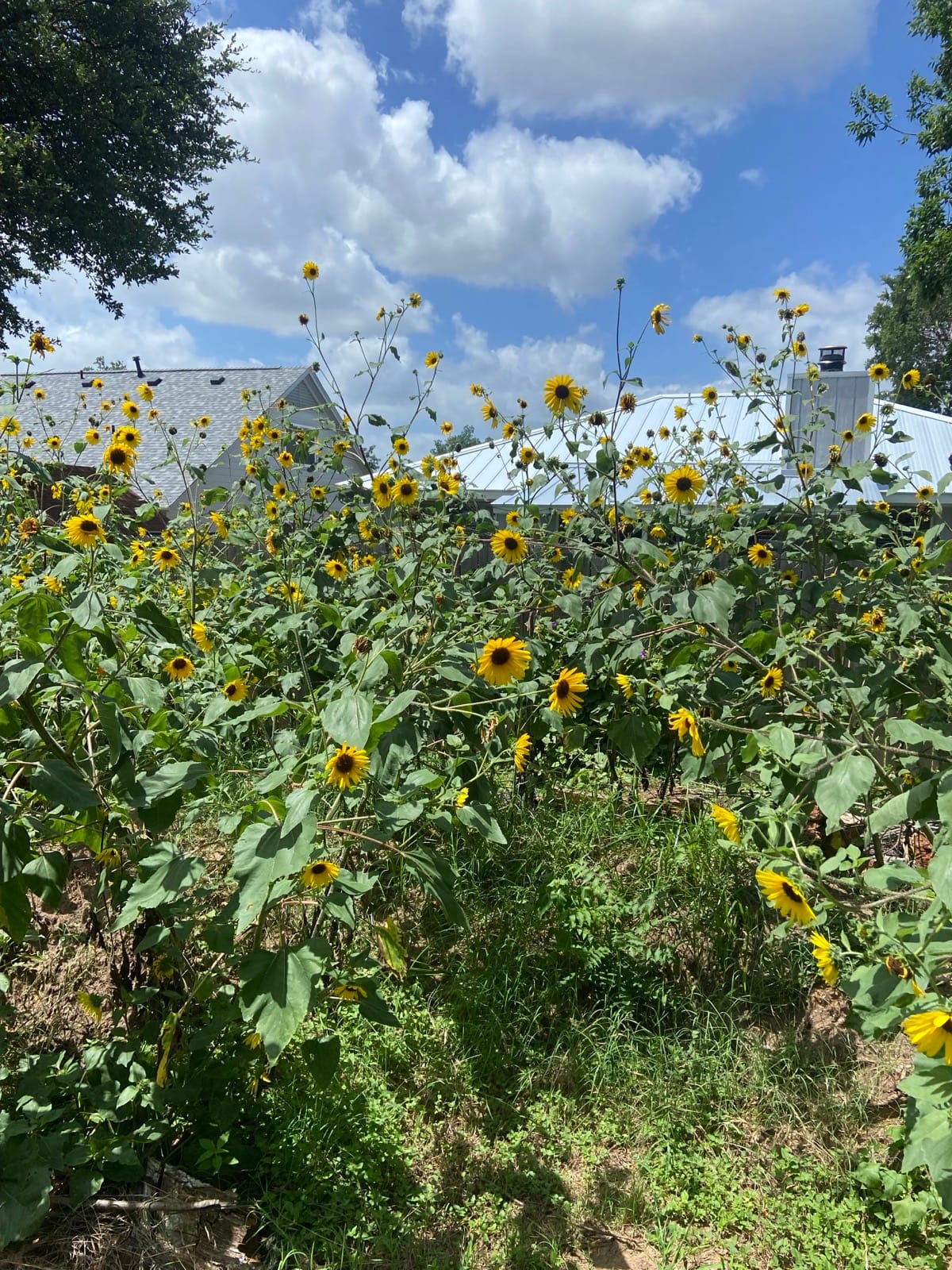
These words come to mind whenever I see the bees. Lately, bees have been having a delightful time in my backyard sunflower forest. We'd hoped to grow a garden this year, but we've mostly grown seven and eight foot tall sunflowers. The bees are thrilled.
Bees were also the love of Michael, the son of a good friend. Michael was a bee keeper in Montana and died last year at 36. His life reminds me to be gentle with ourselves, and with each other. This poem is for his momma, and for him.
Apiary
Here are some facts about honey bees:
to produce a single pound of honey, bees
travel to millions of flowers, searching
for the promise of nectar, flying tens of thousands
of miles, their wings beating hundreds of times
a second. They live in thriving hives, colonies
of up to 60,000 bees, fertilizing hundreds of plants
who grow to become billions of pounds of food.
Yet a single bee's lifetime labor amounts to a few drops,
a mere 1/12 of a teaspoon of honey. For years
a young beekeeper tended a mountain colony,
harvested their honey during the short summer
months. When the cold would come he loaded
the hives onto a truck, drove them to the temperate
fields of California. In the spring, after the bees
pollinated the endless acres of almond trees,
he trucked them back to Montana, watched over them
as they spun their liquid gold. He praised their keen beeness,
their particular intelligence. When the hives were sold,
he wept. The worst thing, he said, was for a hive
to fall silent. Perhaps this was worst, still. When a hive
is lost or becomes destroyed, returning bees
become confused, fly around in circles, unable to find
their way home. Queenless and homeless,
they become known as straggler bees and rarely survive.
We're not so different from the bees.
We, too, need a hive, a path to find our way home.
We, too, need a place where the sweat of our labor
can alchemize into sweetness, into the sticky
bonds of purpose and brotherhood.
When our hives go silent, it's the gentlest among us
who suffer the most, whose fingers
point to the moon of our forgetfulness,
who remind us how tender we are,
and how tender we must be with each other.

O Nobly Born is a reader supported newsletter. If you appreciate receiving the poems of O Nobly Born, you can support this offering by subscribing to the newsletter or make a donation by credit card or through paypal at paypal@growinghumankindness.com. I cherish every donation, as they support this work and enable me to offer her freely to all.
With a grateful heart, Karly
Member discussion